Choosing a suitable CNC machine shop can be a daunting task, especially if you’ve not done it before. It’s not just the matter of who delivers the best; the selection process also involves hiring a shop that delivers exactly what you want, faster.

Plus, there are hundreds of CNC machine shops littered across the continent – which could further complicate the entire hiring process. While initial research like references and testimonials might help, there is a lot that is needed to judge a machine shop’s performance.

If you are confused about what to look for in a precision machine shop, here are a few tips to save the day.

Hiring a Precision CNC Machine Shop: A Checklist for Entrepreneurs

Here is a list of the things that can make your CNC machine shop hunt easier.

●  ISO Certification
You can begin the search by filtering out the shops with ISO Certification. The quality management label simply states your shop is equipped enough to provide you the quality machined parts you are looking for.

●  Experience
Next comes the relevant experience the shop comes with. While machining startups are great on their own and could definitely meet your expectations, you might be looking for machinists or shops that have relatively greater experience working with the same industry domain as yours. Chances are they have already delivered order types and sizes similar to your requirement.

●  Machining Capabilities
Machine shops that come with extensive engineering, design, and manufacturing capabilities are always safe to hire. This way you can ensure they’ll be equipped to resolve any technical or product-based limitations that might arise during the machining and manufacturing process. This also guarantees you’ll receive your order on time if all goes well.

●  Variety of Equipment
A machine shop, however small, comes with solid numbers of equipment. They may not be the latest ones – in case of shops that are just starting or the ones on the stage of obsoletion. But, there are many that boast new-age cutting tools and machining equipment. You may choose them solely based on the order size and the precision needed.

●  Offers Prototypes/Sample pieces
Product sampling is very crucial when dealing with large-scale production. However, there are many shops still that don’t offer sample manufactured pieces or prototypes of the design, which might cause production delays and dissatisfaction. Simply eliminate these types of shops from your CNC hunt.

●  Customer Services and Support
CNC machining and manufacturing is more than just shaping raw materials into precision CNC machined parts; it’s also about how the shop deals with the customer requirements. What is the process they follow? Are they transparent in their approach? What is their workforce like? How do they deal with customer queries? In short, acute customer services is crucial in every industry, including in the CNC environment.

Things To Remember Before You Place An Order

So, you have shortlisted a CNC machine shop you deem fit for your requirement. Next comes actually placing an order with them. Wait…

Before you click on the ‘Request A Quote’ button, be sure to check everything. What is the quantity you looking for and can your shop help you with it? And most importantly, what is your requirement, exactly? You don’t want to cause production delays due to material or tolerance shortcomings, do you?

●  Do you have alternatives for the material type you’ve selected?
It’s possible the shop cannot fetch CNC machining material you’ve chosen on-time. Or it could be very expensive, thereby, increasing the production cost. Anyway, having an alternative always helps in long-run.

●  Are you specific with your tolerances?
You need to specify accurate measurements for precision and quality purposes, obviously.

●  Do you know how the product will be developed?
This is considering you’ve done the custom part design yourself. Not considering how it will be developed while designing can lead to an increase in production costs.

Following the tips mentioned above can help you experience smooth and super-productive CNC machining!

________________________________________

Here at Machining Design Associated Ltd., we offer top of the line CNC machining services to businesses across all industry verticals. For more information, fill up the form here.

The world of Computer Numerical Control (CNC) is extensive. Precision machining is at an all-time high. We get introduced to a new functionality every other week, thanks to all the advancements happening in the tech space. Hand-held lathe gave way to automated lathes, and in another few decades, we’ll have AI directed lathes (those days aren’t far, folks!).

In this post, we’ll be discussing one such innovative offering to the CNC world – Swiss Screw machines. Powerful counterparts that take care of smaller and much complex CNC machined parts, so you can use up your lathes for much larger and extensive parts.

What is a CNC Swiss Screw Machine?

Originally from Switzerland, Swiss screw machines can be best described as a type of automated lathe capable of handling both CNC turning and milling.

The concept of Swiss Screw Machines is nothing new – it was first used in the 1800s, the collet chuck getting patented in the 19th century (1870s). 1960 saw Swiss screw machines gaining its momentum. The first CNC Swiss Screw machine was introduced in the late 1970s, and a decade later, they found their niche in the electronics industry. This machine type is also popular amongst Swiss watchmakers.

Swiss Screw machines are much sophisticated now. Improved designs, servomotors and CNC controls, have given today’s Swiss machines and operators much more liberty to produce highly-precise and complex parts faster, better. They are now widely used in preparing CNC machined parts for medical and aerospace applications – industries that cannot afford imprecise components.

Swiss screw machines are designed to handle both turning and milling, which enables us to produce cent percent perfection in one sitting. In this machine type, the workpiece moves in place of the cutting tool. This process is quite similar to conventional lathe – just, unlike lathe, Swiss lathe have a flexible headstock that moves back and forth (z-direction) along with the bar.

Key Components & Functional Workflow of a CNC Swiss Screw Machine

Swiss CNC screw machines are designed with unique components that work together to deliver high precision, stability, and efficiency. Understanding these core parts and their workflow helps explain why these machines outperform conventional lathes in specific applications.

1. Sliding Headstock & Bar Feed

  • Function: Unlike a traditional lathe where the workpiece is held in a fixed chuck, a Swiss machine uses a sliding headstock that moves axially (along the Z-axis) to feed the bar stock through the machine.
  • Benefit: This ensures the material is always supported close to the cutting zone, reducing deflection and enabling machining of long, slender parts with tight tolerances.
  • Workflow Step: Raw bar stock is loaded into a bar feeder, then advanced by the sliding headstock as each cut progresses.

2. Guide Bushing & Support System

  • Function: The guide bushing is a precision sleeve that tightly supports the bar material just in front of the cutting tools.
  • Benefit: By holding the material within millimeters of the cutting point, it eliminates vibration and bending, enabling accurate machining of small diameters and long, thin components.
  • Workflow Step: As the bar stock slides forward, the guide bushing keeps it stable while tools engage the material.

3. Tool Slides, Gang Plates & Turrets

  • Function: Swiss machines often use gang tool slides (linear tool plates) instead of or alongside turrets. These allow multiple tools to be mounted and brought into the cut without indexing delays.
  • Benefit: Faster tool changes, reduced cycle times, and the ability to perform multiple operations in one pass.
  • Workflow Step: As the sliding headstock feeds material, the tools on the gang slide engage sequentially or simultaneously for operations like turning, grooving, and threading.

4. Live Tooling for Secondary Operations

  • Function: Modern Swiss machines are equipped with live (powered) tooling, enabling drilling, milling, slotting, and tapping operations while the workpiece rotates.
  • Benefit: Eliminates the need for secondary machining centers, reducing setups and handling. Complex parts can be completed in a single machine cycle.
  • Workflow Step: After primary turning, live tools activate to create cross-holes, flats, or other features that would normally require transfer to a mill.

5. Sub-Spindle & Back-Working Unit

  • Function: Many Swiss machines include a secondary spindle (sub-spindle) positioned opposite the main spindle.
  • Benefit: This allows the machine to grab the part and perform back-side machining (facing, chamfering, drilling) without removing it from the machine.
  • Workflow Step: Once the front operations are complete, the part is transferred to the sub-spindle for back-working, after which it is cut off from the bar.

6. Part Cutoff & Ejection

  • Function: A cutoff tool separates the finished part from the bar stock at the end of the machining cycle.
  • Workflow Step: After cutoff, the part is either dropped into a parts catcher or transferred for finishing or inspection, while the sliding headstock advances the bar for the next cycle.

Advantages of Swiss Screw Machines

Swiss Screw machines have a lot to offer, apart from its ability to produce much smaller machined parts. This machine type drives all of its benefits out of its tools, uniquely placed geometry, and mechanics.

Listing a few outstanding ones below:

  • They have a very compact design – with all their parts (tools included) placed in proximity. This reduces the chip-to-chip time from one tool to another to a mere second or less.
  • Operation time in a Swiss machine is relatively lower than its lathe counterpart. They are flexible enough to perform several operations at one time with as many as five tools working together.
  • Swiss Screw machines have this extensive tool zone that can hold up to 20 tools. This number may vary depending on the machine type. The high-end machines may also contain tool changers.
  • They boast perfect surface finish, eliminating the need for an extra involving it.
  • Swiss Scre machines are fit to perform every other secondary operation – milling, drilling, sawing and what not.
  • Setup time is relatively shorter in case of Swiss Screw machines.
  • Fast cycle times and flexibility without compromising quality.

Why You Should Choose Our Swiss Screw Machining Services

At Machining Design Associated Ltd., we provide precision CNC Swiss screw machining services. We have a five-decade-long experience in handling orders of all types and varieties.

Interested in leveraging Swiss CNC turning for your part? Contact us to evaluate whether Swiss machining fits your design, or get a custom quote.


Frequently Asked Questions

How does a CNC Swiss screw machine maintain higher precision than a conventional lathe?

Swiss machines use a guide bushing to support the bar close to the cutting zone, minimizing deflection. The sliding headstock moves the workpiece while the tooling remains fixed, enabling tight tolerances and better surface control compared to a cantilevered setup.

What kinds of operations can a Swiss screw machine perform besides turning?

Modern Swiss machines support live tooling, which allows secondary operations such as milling, drilling, tapping, and slotting – all in a single cycle without moving the part to other machines.

When should I choose Swiss machining over standard CNC turning?

Swiss machining is ideal when your part is long, slender, or has small diameters where deflection becomes an issue. It’s also favorable when your design requires multiple features (threads, milling, holes) in tight tolerances or when minimizing setups is critical.

What are the main challenges in using Swiss screw machines?

Key challenges include complex programming, tooling setup, higher investment cost, requirement for skilled operators, and strict demands on material stock quality and machine calibration.

How can I optimize performance on a Swiss screw machine?

Use high-quality bar stock, precisely size the guide bushing clearance, optimize tooling and CAM toolpaths to reduce idle time, ensure efficient chip evacuation and coolant flow, and maintain regular calibration and tooling checks. These practices help ensure stability, longer tool life, and consistent part quality.

Right materials make the best applications.

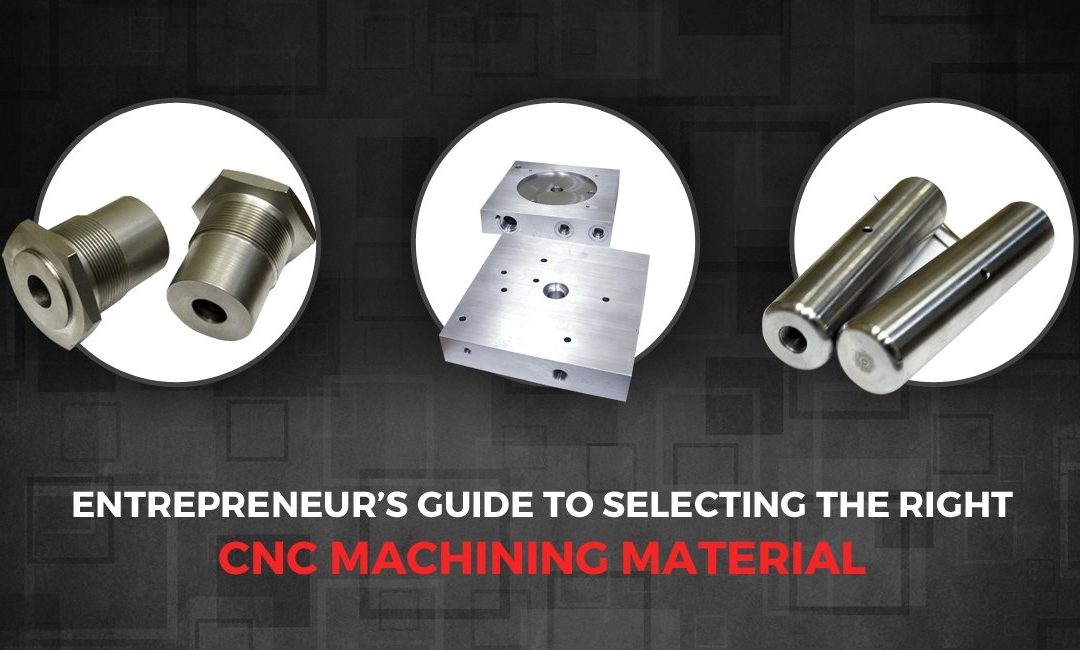
Material selection is a crucial step to get your CNC project right. Think of it as assembling a Subway meal based on your diet plan; you add meats if your diet chart asks for more protein, and greens for a vitamin fulfill. Similarly, selected materials must cover your design prerequisites— hardness, rigidity, thermal stability, and chemical resistance just to name a few. And your budget as well, of course.

Material characteristics are especially important when you require high precision CNC machined parts with complex designs. For instance: amorphous materials like metallic glass and polymers generally hold tighter tolerances than, say, aluminum.

In the following article, we will elaborate more on material types, their characteristics, tips and guidelines on choosing the right materials, and more. Let’s start with the basic: the material selection process.

CNC Materials Selection Process

If you’ve decided to jump the CNC machining wagon, have a valid prototype handy and your budget figured out, it’s time to select the best suitable materials for your project. The basic three steps to material selection are:

Step 1. Define your material requirements: Based on your design, make a high-level list of material prerequisites. Do you need a malleability? Or perhaps a sturdier material? Laser polishing for a surface finish? Consider all the mechanical, physical, environmental, and budget factors.

Step 2. Pin down qualified materials: Identify potential candidates that fulfill your material requirements. Notice, we’re are focusing on ‘candidates’ not ‘candidate’. There’s a solid reason behind it. Have a look:

Here’s what Ronald E. Giachetti, of National Institute of Standards and Technology, wrote in his paper on Manufacturing Process and Material Selection During Conceptual Design:

“The material and manufacturing process selection is performed early in the product development process. At this stage, it is inappropriate to select a single material or process without evaluating all the alternatives. The selection of sets of possible candidate materials and processes allow for greater flexibility in the product development process. The more alternatives, the greater the manufacturing flexibility.”

 Hack:  Make sure you approach readily available materials— it’ll help cut costs and efforts. 


Step 3. Now, select the most appropriate material: The third step is the final showdown: choosing the material with maximum functionality in minimum costs. Or, the materials that check most on your prerequisites list.

In the next section, we will talk about the most popular materials and their properties.

CNC Material Selection- Guidelines

Metals

Most common metals in the CNC machining universe are:

1. Aluminum
Most popular of the bunch; used for both mechanical and aspect components.
(a) Physical properties:
● Medium physical strength (<500 MPa) (Note: Aluminium 7075 is one of the strongest metals at >500 MPa; but it’s a bit pricey)
● Corrosion resistance
● Temperature resistance (<400°C)
(b) Mechanical properties:
● High machinability. Can be machined quicker than other metals
● Readily available; inexpensive
(c) Industries:
● Automotive ( gears and shafts etc.)
● Aerospace (aircraft fittings etc.)
● Healthcare (medical equipment)
● Consumer electronics (electronic housings)

2. Cold Rolled Steel
(a) Physical properties:

● High physical strength (Increases the strength of the finished product by 20%)
● Provides perfect precision as it creates smaller products
● Can handle tighter tolerances
(b) Mechanical properties:
● Medium machinability.
● Moderately expensive
(c) Industries:
● Manufacturing (Machinery parts)
● Aerospace (aircraft fittings etc.)
● Construction
● Consumer electronics (electronic housings, Jigs & fixtures)

3. Stainless Steel
(a) Physical properties:
● Hardness
● Chemical resistance
● High strength (>500 MPa)
● Temperature resistance ( Very high >500°C)
● Corrosion resistance
(b) Mechanical properties:
● Good machinability
● Inexpensive
(c) Industries:
● Automotive
● Aerospace (aircraft fittings etc.)
● Healthcare (surgical equipment)
● Consumer electronics (electronic housings)
● Food Industry
● Marine applications
● Chemical Processing
● Marine applications

4. Brass
Used for high volume applications.
(a) Physical properties:
● Medium strength
● Natural Corrosion resistance
● Low-Temperature resistance (<250°C)
● High tensile strength
(b) Mechanical properties:
● High machinability.
● Readily available; moderately expensive
(c) Industries:
● Automotive ( mechanical parts, valves & nozzles)
● Architecture
● Healthcare (medical equipment
● Consumer goods
● Electrical hardware

Exotic alloys

1. Inconel

(a) Physical properties:
● Temperature resistance
● Corrosion resistance
● Medium strength
(b) Mechanical properties:
● Moderate machinability
● Moderately expensive
(c) Industries:
● Automotive
● Aerospace
● Healthcare
● Consumer electronics

2. Copper
(a) Physical properties:
● Highest electric conductivity
● High corrosion resistance
● Thermal conductivity
● Low chemical resistance (especially to acids, halogens sulphides, and ammonia solutions)
(b) Mechanical properties:
● High machinability. Can be machined quicker than other metals
● Readily available; moderately expensive
(c) Industries:
● Automotive (cooling systems and heat exchanger, valves and radiators etc)
● Aerospace Healthcare (medical equipment)
● Consumer electronics (electronic housings)

Outside of this wide range of metal materials, it’s also possible to use plastics, wood, and even fiberglass and foams with CNC machining technology.

Plastics

1. PVC

(a) Physical properties:
● High strength
● Corrosion resistance
● Temperature resistance
● Chemical resistance
(b) Mechanical properties:
● High machinability
● Readily available; inexpensive
(c) Industries:
● Automotive
● Aerospace
● Healthcare
● Consumer electronics
● Food Industry
● Chemical

2. Nylon
(a) Physical properties:
● High physical strength
● Good impact strength
● High corrosion and abrasion strength
(b) Mechanical properties:
● High machinability. Can be machined quicker than other metals
● Readily available; inexpensive
(c) Industries:
● Automotive (insulators, bearings)
● Aerospace
● Healthcare
● Consumer electronics

Now that you know about different materials, you can select the ones that best suit your CNC project. We, at Machining Design Associated Ltd., offer exceptional CNC machining parts with desired tolerances. Get in touch to know more!


Frequently Asked Questions

What properties are most critical in CNC material selection?

The most critical properties include strength, stiffness, hardness, density, thermal stability, machinability, corrosion resistance, and surface finish requirements. You must match these properties to your part’s function and operating conditions.

Can I prototype with a different material and switch for production?

Yes, you can prototype in a more cost-effective or machinable material (e.g. aluminum) and then move to a higher performance one (e.g. stainless) for production. Be careful of differences in thermal expansion, strength, and behavior that may impact dimensions or performance.

How do material cost and availability affect the decision?

Even if a material meets performance needs, high cost or long lead time can make it impractical. Always factor in raw material availability, supplier reliability, and batch costs when narrowing your choices.

Are plastics ever a better choice over metals in CNC machining?

Yes – plastics (like POM, ABS, Nylon, Delrin) can outperform metals when weight, chemical resistance, insulation, or damping properties are priorities. They’re also easier to machine, but typically offer lower strength and thermal stability than metals.

How can I test if a material choice is viable before full production?

You can run a small prototype or pilot batch, measuring parameters such as dimensional accuracy, surface finish, tool wear, thermal distortions, and environmental performance. Use the results to validate or adjust your material choice before scaling.

CNC milling is one of the most popular CNC machining processes. Milling incorporates the technical aspects of both drilling and cutting processes; CNC milling uses a rotating cylindrical cutting tool just like in drilling. But, unlike the single axis motion of the latter, the cutter and workpiece in a milling machine can move along three, four and even five axes allowing it to produce shapes, holes and slots with tight tolerances. In addition, the workpiece is often moved across the milling tool in different directions, unlike the single axis motion of a drill.

However, multi-axis functionality isn’t the only unique thing about Custom CNC milling. In this article, we will be exploring some of the major/minor facets of the machining type including main components, CNC mill types, advantages with CNC milling and more.

CNC Milling Machine- Main Components

Custom CNC Milling

Let’s first familiarize ourselves with the critical components that comprise a CNC Milling machine.

1. Control panel: Control panel is the brain of a CNC milling machine. The machinist/controller feeds the G-code (required dimensions) using the keyboard which, in turn, instructs the axis motors to move the cutters and other components.

2. Table: The table is used to hold the workpiece stationary for the entirety of the milling process. The workpiece is fit to the metal/wooden/plastic table using T-slots and metal clamps.

3. Column: The columns run along the axis to give a backbone to the milling part.

4. Cutting tool: A cutting CNC machine tool is attached to the column. It moves across the axis to give the desired shape to the CNC machined parts.

5. Frame: As the name suggests, the frame gives sturdy support to the machine, providing them with maximum rigidity to withstand cutting forces. It is mainly built using cast iron.

6. Axes: The axes in a CNC milling machine allows cutting tool/workpiece to move around obtain the maximum possible precision.

7. Spindle: The spindle consists of a rotating assembly that holds the cutting tool and a motor that runs the entire workpiece.

8. Coolant supply tube: The coolant supply tubes are used to cool down the rapidly heating metal workpiece and to lubricate the cutting tool for smooth movement.

There are two types of CNC milling machines available with respect to its working- Vertical and Horizontal- with the major difference being in their spindle placement.

  • Vertical CNC Mills: Vertical CNC milling machines have a vertical spindle axis. In this machine type, the cutters are placed vertically in the spindle and are able to make drilling or plunge cuts. Popular examples of Vertical CNC mills include Bed mills and Turret mills.
  • Horizontal CNC Mills: In horizontal CNC milling machines, the cutters are placed horizontally on an arbor.

Here are a few features of a CNC Milling machine that makes it an ace in the CNC manufacturing industry.

1. Safety– Custom CNC Milling process is about 10x faster and safer than traditional milling machines’. With computer systems handling everything, there is minimal contact between the machines and the operators. The operator feeds in the codes and the machine is directed to produce custom machined parts with tight tolerances. The manual work is reduced by a multifold and the chances of human error is next to nothing.

2. Accuracy – CNC milling machines are notorious for producing guaranteed accuracy all thanks to its next-gen features and innovative working. Tight tolerances are no big deal with CNC milling machines.

3. Versatility – CNC milling machines are not limited to producing machined parts out of one material type. From metals to industrial plastics and alloys, almost every material type can be used with a CNC milling machine that too without compromising on the quality front.

4. Lower Overhead Costs – With a severely automated process in place with CNC milling machines, you save a huge chunk of machining and manufacturing costs which you can use in any other development facet.

Here at Machining Design Associated Ltd., we offer top of the line CNC milling services to businesses across all industry verticals. For more information, drop us an email at machiningdesign@mdaltd.ca or fill-up the form here.


Frequently Asked Questions

What is custom CNC milling and how is it different from standard milling?

Custom CNC milling involves machining parts to unique, client-specific designs rather than repeat mass parts. It often includes complex features, tighter tolerances, specialized materials, and tailored setups. The process is more flexible and client-driven than standard or templated milling services.


What tolerances can be achieved with custom CNC milling?

Depending on machine capability, tooling, and setup, custom CNC milling can achieve tight tolerances – often in the range of ±0.005 mm (±0.0002 in) or better. However, attainable tolerance depends on part geometry, material, fixture stability, and process parameters.


Which materials are best suited for custom CNC milling?

Common materials include aluminum, stainless steel, mild steel, titanium, plastics (e.g. PEEK, ABS), and composites. The choice depends on part requirements, machinability, thermal behavior, tool wear, and cost. Some materials demand specialized tooling or coolant strategies.


How does part complexity affect cost and lead time in custom milling?

Higher complexity – more features, tighter tolerances, more setups, multiple tool changes – increases both tooling and programming time, fixture complexity, inspection needs, and thus cost and lead time. Simplifying design or relaxing tolerances where acceptable can reduce these.


What questions should I ask a custom CNC milling provider before placing an order?

Key questions include:

  • What are your machine capacity and axes (3-axis, 4-axis, 5-axis)?
  • What tolerances can you reliably maintain?
  • Do you offer design reviews or manufacturability feedback?
  • What is your lead time and quoting process?
  • What materials and finishes do you support?
  • How do you handle quality assurance and inspection?

The Machining world is growing at an unbelievable pace. Handheld machines have advanced to highly sophisticated computerized machines (CNC) and use CNC machining to produce machined parts. Similarly, basic 2,3-axis CNC machining have now led on to a more improved, more like 5-axis CNC machining. While expensive, 3+2 axis and 5-axis machining processes are now a staple in almost every CNC machine shop. It’s imperative that both large-scale and small and medium manufacturing units are utilizing the one and many benefits of this machine type – who is going to pass the opportunity to get better productivity, higher accuracy at much lower costs (leaving the initial set-up cost, of course). In this article, we will cover benefits of 5 axis CNC machining.

But, there is more to 5-axis CNC machines than just that. Ready to find more?

1. Heightened Accuracy, Efficiency & Cost Effectiveness: Sophisticated Machines

First on our list is, obviously, the points we mentioned before. There is a reason why machinists are fond of this machine type, even with complex processes and all. 5-axis machining is the more efficient, accurate, and improved of all its counterparts, here’s everything you need to know about 5 axis cnc machining. Owing to less fixturing at multiple operations, using it directly translates to better work-piece quality and durability. This means good parts, less wastage, lower tooling costs, and shorter working duration.

2. Complicated Shapes, Angles Made Possible

With its ability to reach even the most complicated of angles, five-axis machines serve as a savior to all those looking for more complex 4D and 5D parts. Something we would never be able to achieve with your regular 2 axis, 3 axis machines. That too in a single setup, all thanks to its structure which makes it possible to reach out to both sides at one-sitting. All these things translate to better productivity and improved work-piece quality.

3. You Can Make Use of Shorter Cutting Tools

Shorter cutting tools are a mess to handle, especially with your general CNC machines. Thankfully, we are fully able to utilize the power of better tooling angles, better cutting speed, and precision parts with these tools as they can be fit well to a 5-axis machine. Here, you can have the head oriented towards the job and the cutter towards the surface. As the machine holds the tool well, the load on the cutter is reduced, resulting in decreased unfortunate breakages and vibrations.

4. Improved Drilling Process

5-axis machining is an absolute blessing for the drilling process, drilling of holes. This is due to its ability to reach smaller and more complex angles (see point no. 2), giving a much cleaner finish. On the contrary, with 3 axis machines, you have to set up separate sitting for every angle. Which, of course, is both time-taking and cost engaging?

5. They are Compatible with CAD/CAM

This compatibility brings better execution to the planned designs. You are now able to achieve even the most complex of structures, quite easily. Plus, this mix has engaged a lot of job opportunities in the sector. All sounds good here.

When 5-Axis Makes the Most Sense

While 5-axis CNC machining offers many benefits, it isn’t always the most practical choice for every job. It shines in scenarios where complexity, precision, and efficiency matter most:

1. Complex Geometries

  • Aerospace turbine blades, impellers, orthopedic implants, and automotive engine components often have intricate curves, undercuts, and multi-surface features.
  • 5-axis machines can approach these features from multiple angles in a single setup, something 3-axis machines struggle with.

2. Multi-Surface Parts Requiring Tight Tolerances

  • Parts with multiple faces or orientations (e.g., mold cavities or housings) benefit because 5-axis machines can access and finish them without constant repositioning.
  • This reduces the risk of misalignment between setups, ensuring tighter tolerances.

3. Reduced Setup Time in Low to Mid-Volume Runs

  • If you’re machining small batches or prototypes, setup time can dominate costs.
  • 5-axis machining minimizes setups, saving both time and money while ensuring repeatability.

4. Improved Surface Finishes

  • When the final surface quality is critical – such as in medical devices or aerospace components – 5-axis machining allows the tool to maintain consistent engagement with the part, minimizing chatter and improving finish.

5. Industries Demanding Innovation & Agility

  • Aerospace, defense, energy, and medical device manufacturing often require frequent design changes and high-complexity parts.
  • 5-axis systems make it easier to adapt to new requirements quickly without excessive fixture design or retooling.

Challenges & Considerations

While 5-axis CNC machining is powerful, there are trade-offs and challenges to consider before committing:

1. High Initial Investment

  • 5-axis machines are significantly more expensive than 3-axis models.
  • Small manufacturers must weigh the long-term ROI against upfront costs.

2. Programming Complexity

  • Advanced CAM software and post-processing are required to generate toolpaths for simultaneous 5-axis motion.
  • This demands experienced programmers and may increase lead time during the learning phase.

3. Operator Training & Skills Gap

  • Skilled machinists are essential to run, calibrate, and maintain 5-axis machines effectively.
  • Companies may face challenges finding or training talent with the right expertise.

4. Maintenance & Calibration

  • The added rotary axes and complexity mean more moving parts that require calibration and servicing.
  • Precision misalignment in even one axis can compromise part quality.

5. Over-Engineering Risk

  • For simple prismatic parts, 5-axis machining may be unnecessary and cost-inefficient compared to a well-optimized 3-axis setup.
  • Manufacturers must assess whether the complexity of the part truly requires 5-axis.

6. CAM & Software Costs

  • Along with the machine, advanced CAM packages and updates can be costly.
  • Budgeting for software and training is as important as budgeting for the hardware itself.

In a nutshell, 5-axis CNC machining is an amazing process to work with. Do you want to experience the sophisticated products resulting from it? Drop us a request and we’ll get you the machined parts fabricated exactly to your needs.

Frequently Asked Questions

What is 5-axis CNC machining?

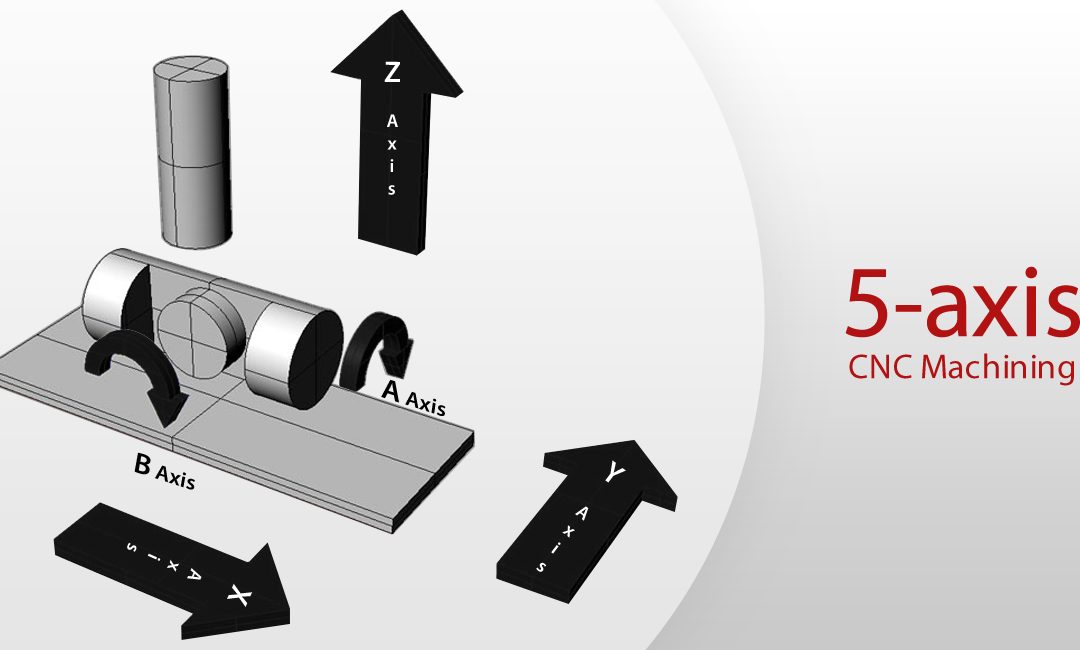
5-axis CNC machining refers to the ability of the cutting tool or workpiece to move along five axes (typically X, Y, Z, plus two rotational axes) simultaneously. This allows the machine to approach the part from nearly any direction, enabling complex shapes and reducing the need for repositioning.


What are the main advantages of 5-axis over 3-axis machining?

Compared to 3-axis machines, 5-axis machines reduce the number of setups, allow machining of complex geometries in a single program, improve surface finishes by maintaining optimal tool engagement, and also enable reaching undercuts and angled features more easily.


Does 5-axis machining extend tool life?

Yes – one of the benefits is more favorable cutting angles and reduced cutting forces on the tool, which can lead to less wear. The ability to adjust tool approach angles also helps distribute wear more evenly.


When is it not worth using 5-axis machining?

In cases where part geometry is simple, volumes are very high and cost-per-part pressures are tight, or when CAM/programming resources are limited, a 3-axis or 3+2 approach might be more cost-effective. Also, initial investment and programming complexity can be deterrents.


How does 5-axis machining improve surface finish and quality?

Because 5-axis machines can orient the tool to maintain optimal contact with the work surface, they reduce tool deflection and minimize vibration or chatter. This, in turn, results in smoother surfaces and tighter tolerances.

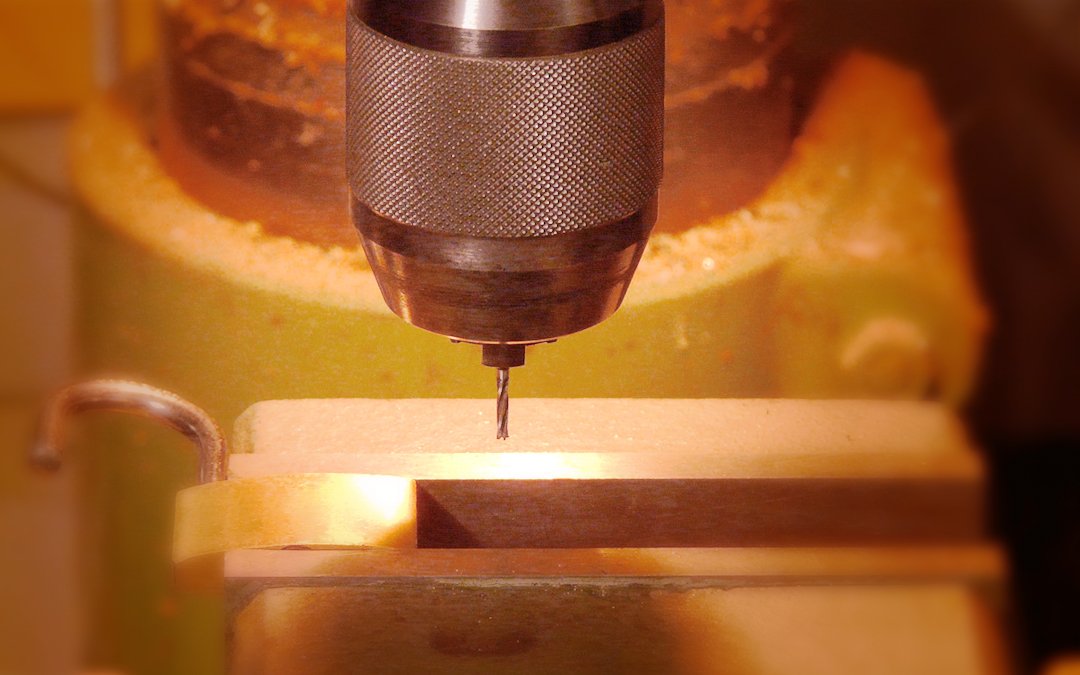
Proper tooling is the most important part of every machining process. We need to have specific functioning milling tools if we want to develop milling parts. Same goes for all other operations. Think of it as cooking; one cannot choose potatoes as the main ingredient when making an apple pie. Yep, this analogy is not far from reality.

So we have different tools for different operations in a CNC machining shop. We might reuse some particularly reusable tools, replace the old types with advanced ones, but that’s about it. True, we focus on quality and durability, something that’ll extend its working capability (and less wear and tear). But, did you ever give a thought to tool shape?

If you didn’t, we’ll tell you why you should pay attention to your tool shapes. Let’s get to the BOTTOM of the CNC machine tools world!

Key Advantages of Flat-Bottom Tools in CNC Machining:

At Machining Design, we work with a plethora of tools but flat bottom tools have definitely won our hearts (and infrastructure) over. Here’s a list of reasons why we would suggest it to you as well:

1. Lower Machining Costs

As CNC’rs, we’re all aware that machining is not cheap. Add in tool maintenance and replacement costs, and it’s going to cost us more than ever. While we cannot cut on labor and operational costs, we can definitely save some using the flat bottom tools.

Now, how do they make that possible?

For one, they eliminate the extra run-time by fitting exactly where they are required. Due to their shape, they are often sturdier when compared to traditional machining tools. Carbide fit flat bottom tools beat every other tool in terms of durability. Imagine the amount of money you’ll save!

2. They are more functional

There is a list of drilling operations where these flat bottom tools play the role of a hero. Take thin plate drilling for example. When performing this operation, regular tools often face irregularities due to pushing materials through the exit hole. This derails us from achieving the desired perfection in the drilled holes. Flat bottom drills are extremely beneficial here as due to their general geometry they even downward forces. Hence, more clean surfaces.

3. They don’t create burrs

Unlike traditional tools, using flat bottom drilling tools helps us avoid unexpected (and undesired) burrs on the other side of the material. Make way for straighter and regular holes.

4. Is fit even for angular functions

Flat bottom drills are perfect for irregular surfaces due to their geometry, especially if it’s required to perform angular or tilted operations.

5. It’s stable

When countering with a half hole drilling, flat bottom drilling is proven to extremely beneficial. This is because due to the lack of material on both sides of the drill, any other machining tool may walk to the side of the material, creating an extremely undesirable situation. A flat bottom drill works closely on the entire cutting geometry, making it perfect for drilling half holes even on the edge of the material.

When to Use Flat-Bottom Tools (Best Use Cases)

Flat-bottom tools are not always the universal choice, but they shine in certain machining scenarios where conventional drill or end mill geometries struggle. Here are the most common use cases:

1. Drilling Thin Sheets or Plates

  • Flat-bottom drills prevent “walking” and wandering at the entry point.
  • They also reduce burrs on exit when working with thin metals, plastics, or composites.

2. Working on Angled or Irregular Surfaces

  • Traditional drills may skid off angled or curved surfaces, while flat-bottom tools provide a more stable entry point.
  • Common in aerospace and automotive parts with complex geometries.

3. Interruption Machining (Cross-Holes or Partial Holes)

  • When drilling across an existing hole, slot, or cavity, flat-bottom tools offer stable cutting and reduce edge chipping.
  • Useful for manifolds, fluid channels, and mold components.

4. Creating Flat-Bottomed Holes Without Secondary Operations

  • Conventional drills create conical hole bottoms that often require end mills to flatten.
  • Flat-bottom tools save an additional step, speeding up production and improving accuracy.

5. Applications Requiring Burr-Free Holes

  • In electronics, medical devices, and precision parts, burrs can cause functional issues. Flat-bottom geometry minimizes rework and improves surface integrity.

Tips for Maximizing Flat-Bottom Tool Performance

To get the best results, machinists should follow these practices when using flat-bottom tools:

1. Optimize Cutting Parameters

  • Start with conservative feed and speed settings, then adjust gradually.
  • Too aggressive settings may increase tool wear or surface damage.

2. Use Peck Drilling for Chip Evacuation

  • Especially in deeper holes, retract the tool periodically to clear chips.
  • This prevents clogging, overheating, and premature tool failure.

3. Ensure Proper Coolant Supply

  • Apply consistent coolant or cutting fluid directly to the cutting edge.
  • This reduces heat buildup and improves tool life.

4. Select the Right Tool Coating & Material

  • Coatings such as TiAlN or DLC can extend tool life in harder or abrasive materials.Carbide flat-bottom tools are preferable for high-performance operations.

5. Check Rigidity & Workholding

  • Flat-bottom tools rely on stable setups; ensure minimal vibration and secure clamping.
  • Poor rigidity leads to chatter and dimensional inaccuracies.

6. Regular Tool Inspection

  • Watch for edge chipping or dulling, as flat edges are sensitive to wear.
  • eplace or resharpen before hole quality declines.

Common Pitfalls & How to Avoid Them

While flat-bottom tools provide clear benefits, there are potential pitfalls if not used correctly. Here’s what to watch for:

1. Using Flat-Bottom Tools for Deep Holes

  • Pitfall: Poor chip evacuation and heat buildup lead to breakage.
  • Solution: Limit use to shallow-to-moderate depths or combine with pilot drilling.

2. Incorrect Feed/Speed Settings

  • Pitfall: Running at overly high feed rates causes chatter, poor surface finish, and tool wear.
  • Solution: Follow manufacturer recommendations and adjust based on material hardness.

3. Inadequate Coolant Delivery

  • Pitfall: Insufficient lubrication accelerates wear and causes thermal cracks.
  • Solution: Use flood coolant or high-pressure through-spindle cooling for consistent flow.

4. Not Accounting for Tool Wear

  • Pitfall: Continued use of dull flat-bottom edges causes poor hole quality and dimensional errors.
  • Solution: Monitor wear and adopt preventive maintenance schedules.

5. Using in the Wrong Application

  • Pitfall: Applying flat-bottom tools for tasks better suited to conventional drills (e.g., very deep holes).
  • Solution: Reserve flat-bottom tools for thin plates, angled entries, burr-free applications, and interrupted cuts.

Working with flat bottom CNC tools definitely, make our lives (and machining process) easier. It’s easy to keep, light on pockets and DURABLE. Now, ain’t this what all of us need in our CNC machine shop?

Got questions? Want to go deep into the wonderful world of machining? Just drop us a line, and one of us will get back to you soon!


Frequently Asked Questions

What is a flat-bottom tool in CNC machining?

A flat-bottom tool has a geometric tip profile with a flat surface at its bottom, rather than the pointed or rounded tip of conventional drills or end mills. This geometry helps reduce burr formation, improve stability in thin plates, and maintain cleaner hole exits.


In which applications are flat-bottom tools most useful?

Flat-bottom tools perform especially well in drilling thin sheets, creating hole exits without burrs, angular or tilted surface operations, and intermittent wall contexts (e.g. half holes or edge holes).


Do flat-bottom tools eliminate burrs completely?

While they significantly reduce burrs compared to conventional tools, burr formation may still occur in challenging materials or aggressive parameters. Proper tooling strategy, feeds/speeds, and post-processing help further minimize burrs.


How should I adjust cutting parameters when using flat-bottom tools?

Start with conservative feeds and speeds to ensure stability. Use peck drilling if necessary to allow chip evacuation. Optimize coolant flow and tool coating. Monitor vibration or chatter, and tune to minimize tool movement.


Are flat-bottom tools suitable for deep holes or thick material?

They are less ideal for deep holes or very thick materials, where chip evacuation, tool rigidity, and coolant reach become challenging. In those cases, traditional drills or specialized deep-hole tooling may be better suited.