
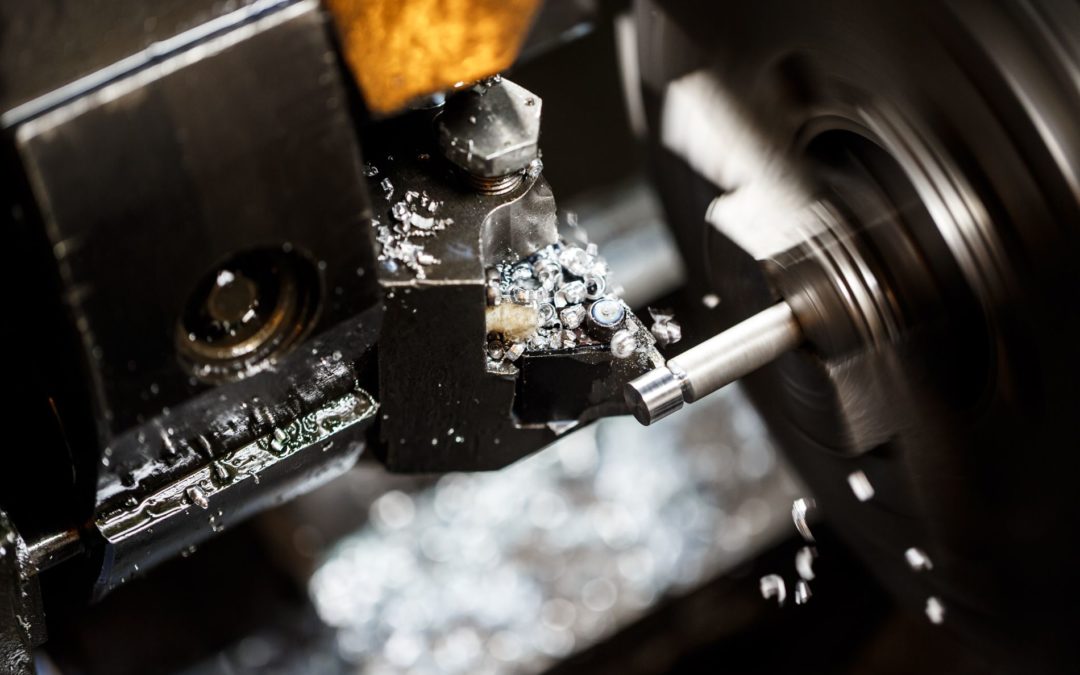
In the world of manufacturing, few innovations have been as transformative as CNC (Computer Numerical Control) machining. What began as a labor-intensive, manually guided process has evolved into a high-precision, fully automated discipline that powers industries ranging from aerospace and automotive to medical devices and electronics.
Let’s take a closer look at how CNC machining has developed over the decades—how it transitioned from manual craftsmanship to a cornerstone of modern automated manufacturing.
A Look Back: Manual Machining and Its Limitations
Before CNC, machining was entirely manual. Skilled machinists operated lathes, mills, and grinders by hand, using blueprints as guides. While this allowed for customization and craftsmanship, it also had significant drawbacks:
- Time-consuming setups
- Limited precision and repeatability
- Higher error rates
- Longer production times
- Inconsistencies in complex geometries
In essence, while manual machining served industry well for centuries, it struggled to meet the growing demands of industrialization and mass production.
The Birth of CNC: A Digital Revolution
The foundation for CNC machining was laid in the 1940s and 50s, with early attempts to automate machine tools using punched tape and servomechanisms. By the 1960s and 70s, with the rise of computers, true CNC systems began to emerge.
These early CNC machines used G-code (a programming language still in use today) to control movement, speed, and toolpaths. Unlike manual methods, CNC machines could produce identical parts repeatedly with unmatched accuracy.
Key milestones during this phase:
- Introduction of NC (Numerical Control) using punched cards
- Development of G-code and early programming standards
- Adoption in aerospace and defense for high-precision parts
Advancing Through the Digital Age
The 1980s and 90s saw rapid advancements in CNC technology, thanks to developments in computing, software, and hardware. Machines became more reliable, user-friendly, and connected.
Major innovations included:
- PC-based controls replacing analog systems
- CAD/CAM integration, allowing direct transfer of designs to machines
- Multi-axis machining, enabling the creation of complex 3D parts
- Touchscreen interfaces and graphical programming
- Probing and automated measurement systems
These developments dramatically increased productivity, made complex parts more accessible, and reduced setup and cycle times.
The Modern Era: Automated Excellence
Today’s CNC machining is the epitome of precision automation. From single-axis turning centers to multi-axis machining cells integrated with robotic arms and AI-driven software, modern CNC machines can run 24/7 with minimal human intervention.
Features of Modern CNC Systems:
- 5-axis and 9-axis machining for unparalleled versatility
- Automatic tool changers (ATC) to reduce downtime
- Real-time monitoring and IoT integration
- Predictive maintenance and AI-enhanced diagnostics
- Unattended (lights-out) machining capabilities
Manufacturers now use CNC not just for mass production, but also for prototyping, custom part manufacturing, and on-demand production, enabling greater flexibility in how products are developed and delivered.
Benefits of Today’s CNC Machining
- Exceptional accuracy and repeatability
- High-speed production with minimal errors
- Reduced waste through optimized toolpaths
- Cost-effective for both low and high-volume production
- Compatibility with a wide range of materials, from metals to composites
The Road Ahead: Smart CNC and Industry 4.0
As we enter the era of Industry 4.0, CNC machining is becoming even more intelligent and autonomous. With integration into smart factories, machines now communicate, self-optimize, and adapt in real-time.
Future trends include:
- AI-generated toolpaths and self-correcting processes
- Digital twins for virtual simulation of machining operations
- Blockchain for traceability and supply chain transparency
- Hybrid CNC machines that combine subtractive and additive manufacturing
Conclusion
The evolution of CNC machining – from manual tools to fully automated systems – reflects the broader transformation of manufacturing itself. What once required hours of human effort and careful hands is now accomplished in minutes with micron-level precision and minimal waste.
As CNC technology continues to advance, it will not only redefine what is possible in manufacturing but also empower a new generation of innovators, designers, and engineers to bring their visions to life faster and more efficiently than ever before.
Frequently Asked Questions About the Evolution of CNC Machining
How has CNC machining evolved from manual machining?
CNC machining has evolved from manually operated machine tools to computer-controlled manufacturing systems capable of producing complex components with high levels of precision and repeatability.
Modern CNC machines use programmed instructions to control cutting tools and machine movements, reducing the need for manual intervention and allowing manufacturers to produce increasingly complex parts more efficiently.
What is the difference between manual machining and CNC machining?
Manual machining requires an operator to control machine movements and cutting operations directly, while CNC machining uses computer-controlled programs to automate machine movements and manufacturing operations.
CNC machining can provide greater repeatability, consistent production, faster processing, and the ability to manufacture complex geometries that may be difficult or time-consuming to produce manually.
How did computer numerical control change manufacturing?
Computer numerical control, or CNC, transformed manufacturing by allowing machine tools to follow precise digital instructions. This made it possible to automate complex machining operations while improving repeatability and reducing dependence on manual machine control.
CNC technology also helped manufacturers produce increasingly complex components while maintaining consistent dimensional requirements across production runs.
How has automation improved CNC machining?
Automation has helped reduce manual intervention, improve production consistency, optimize machine utilization, and support more efficient manufacturing workflows.
Modern CNC environments can incorporate automated tool changes, multi-axis machining, digital programming, inspection processes, and other technologies that help manufacturers produce complex components more efficiently.
Why is CNC machining more precise and repeatable than traditional manual machining?
CNC machines follow programmed toolpaths and controlled machining parameters, allowing the same manufacturing instructions to be repeated across multiple components.
This level of process control can improve dimensional consistency and repeatability, particularly when producing components with complex geometries or tight manufacturing requirements.
What role does multi-axis machining play in modern CNC manufacturing?
Multi-axis machining allows cutting tools to approach a component from multiple orientations, making it possible to manufacture complex geometries and features with fewer setups in many applications.
Modern 3-axis, 4-axis, and 5-axis CNC machining capabilities can improve manufacturing flexibility and help reduce setup requirements for complex components.
How is modern CNC machining different from early CNC technology?
Modern CNC machining has advanced significantly through improvements in machine controls, software, cutting tools, automation, multi-axis capabilities, digital design, and manufacturing processes.
These developments allow today’s CNC systems to handle more complex geometries, optimize machining operations, improve repeatability, and integrate more closely with digital manufacturing workflows.
Will automation replace machinists in CNC manufacturing?
Automation reduces the amount of manual machine operation required, but skilled machinists remain important for programming, setup, tooling, process optimization, quality control, troubleshooting, and manufacturing decisions.
Modern CNC manufacturing is therefore better understood as a combination of advanced automation and skilled human expertise rather than a complete replacement of machinists.